
Developing software: Fixed-price software project or a resourcing model?
Software products can be developed in many ways, including in-house or with external partners. When leveraging external expertise, a software product can be delivered as a fixed-price project (full delivery), through a resource-based model, or as a combination of the two.
In this blog, we explore the question: Should a software product be built as a project or by using resourcing? This question is also discussed by Sampsa Siitonen, CEO of Marvel Consulting, and Antti Pietilä in the latest episode of Antti’s Menestystä Etsimässä podcast. You can listen to the podcast on Spotify or watch the episode on YouTube (in Finnish).
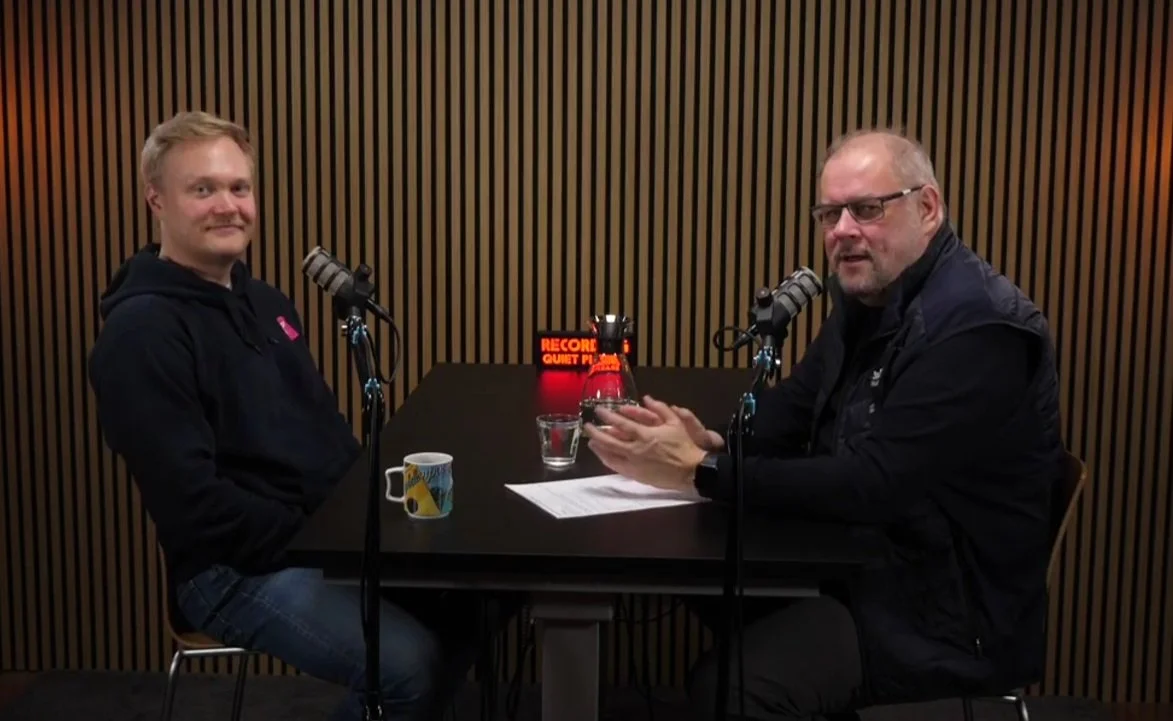
Sampsa and Antti. Picture from Menestystä Etsimässä podcast.
In a fixed-price project, the vendor is in charge
In a fixed-price project delivery, the software product or service provider sells the customer a clearly specified and defined project. A fixed-price project can sound appealing because of its fixed cost. However, the challenge lies in the level of precision required to define that price: the final product must be specified in more detail, in advance, in order to price the project upfront. Due to the difficulty of estimating the effort required, these projects often include a significant safety margin, meaning an extra buffer built into the price.
In a full-delivery, fixed-price project model, the customer is more dependent on the vendor when selecting the people who do the actual work. One risk is that the project may start with the vendor’s top talent, but as it progresses, they might be replaced by other people.
In the resourcing-based model, the customer is responsible for the project
In the resource-based model, the overall responsibility for the project lies with the customer; you are primarily responsible for the progress of your own software project. The vendor adapts to the customer’s way of working and can contribute one or more consultants to the project. In this model, the vendor does what the customer wants and how the customer wants it done.
Resourcing gives your company the opportunity to scale the team flexibly, according to your needs. You can assess the competencies of your existing team, identify what skills you already have, and bring in an external expert to fill any gaps, either for a short period or for the long term.
That said, resourcing requires the ability to keep the project under control. However, if needed, you can also bring in an external Project Manager to support your work, especially if the project feels stuck or there are other challenges related to leading it.
A hybrid model is a combination of both
It’s worth remembering that the choice isn’t strictly either-or; a fixed-price project or resourcing. Depending on your needs, you can also use a hybrid model that combines elements of both approaches.
A typical hybrid example could be a migration or transition project, where you move from one system to another. You might need an external team to handle the migration itself, but only a single consultant to support training on the new system.
When to choose a fixed-price project, resourcing, or something in between?
Consider your own project and your team. What capabilities do you already have in-house, and what expertise is missing? Also consider the technologies required for the work, or alternative technologies, both in terms of your current needs and future maintainability.
Choosing the right development model for a software product depends heavily on the situation and on your company. It requires a deep understanding of your own needs and careful risk assessment.
If you’d like help deciphering your situation, we’re happy to help! You can contact Sampsa directly via our contact page. Don’t struggle with your questions alone!
For more insights and thoughts on the topic, check out Sampsa and Antti’s podcast. The episode also covers topics such as artificial intelligence in software development, and the current state of the recruitment market and upcoming trends. If you’re interested, you can also visit Antti’s blog, where you’ll find an overview of the podcast content, along with links to specific segments of the episode that may be most relevant to you (in Finnish).